If you’re serious about futures trading, finding the right mentor can save you years of trial and error. A good mentor helps you master discipline, risk management, and trading strategies tailored to the high-stakes futures market. Here’s what to look for:
- Proven Success: Verify their trading track record with data from reputable sources or platforms.
- Specialization in Futures: Ensure they focus on futures trading, not general markets.
- Credentials: Look for certifications like Series 3, CMT, or CFA to confirm expertise.
- Teaching Style: Check if their communication and methods align with your learning preferences.
- Availability: Confirm they offer consistent support and personalized guidance.
- Student Success: Read verified reviews to see if their mentees achieve sustainable results.
Choose a mentor who can teach you the nuances of futures trading, such as managing leverage, understanding market structure, and scaling funded accounts with risk management essentials. Start with a consultation to assess their expertise and ensure they meet your goals.
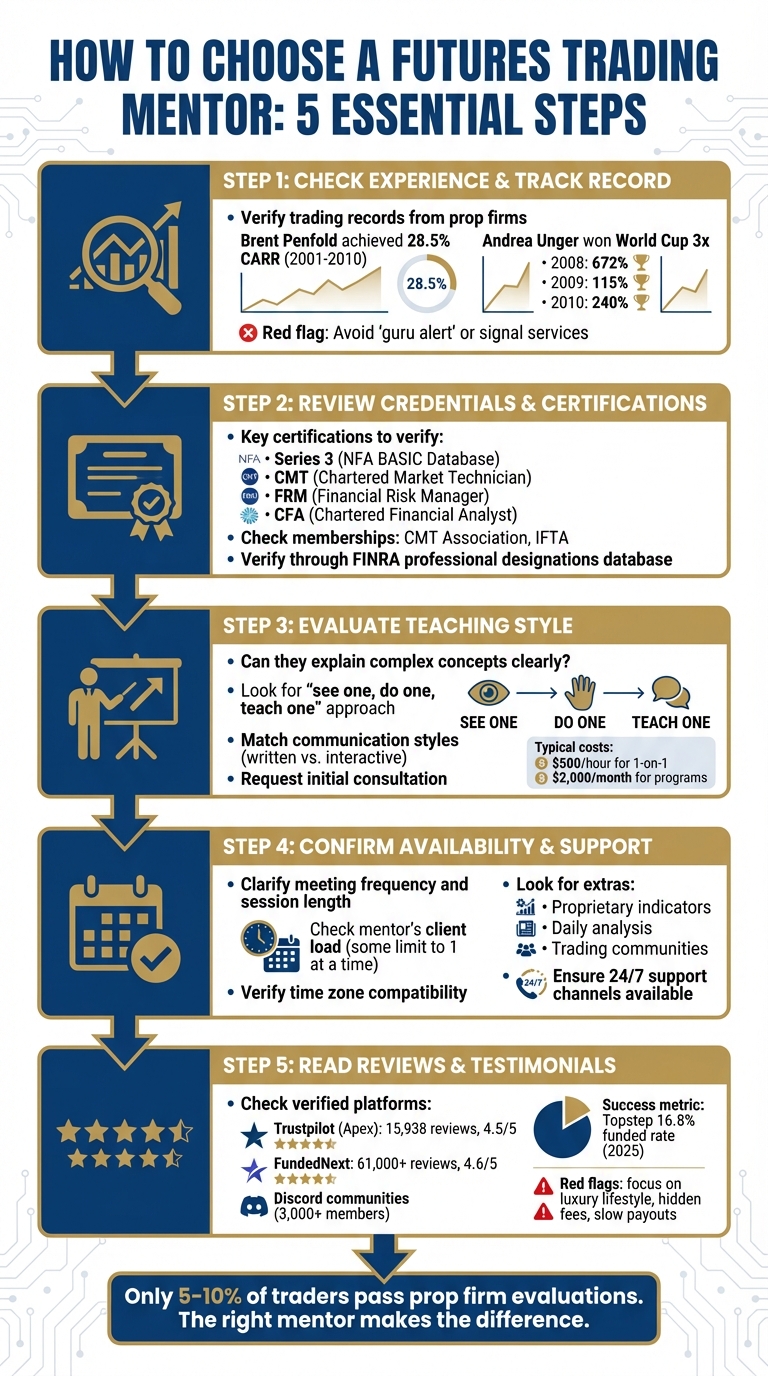
5-Step Process to Choose the Right Futures Trading Mentor
Best Futures Trading Mentors – 3 of the Best in the Industry
sbb-itb-46ae61d
Step 1: Check the Mentor’s Experience and Track Record
Before choosing a mentor, it’s crucial to confirm their actual success in futures trading. This isn’t about flashy claims – it’s about proven results and genuine expertise.
Verify Their Trading Success
A credible mentor should have verified trading records from respected sources, such as prop firms, and should be recognized within the industry. Look for appearances on platforms like Futures Radio Show, AlphaMind, or Trading Nut. For example, Brent Penfold, a full-time futures trader, achieved an audited Compound Annual Rate of Return (CARR) of 28.5% between June 2001 and June 2010. He credited his success to the teachings of his mentor, Larry Williams. This level of transparency sets apart real professionals from those offering empty promises.
Other examples include Josh Schuler, who has been featured on Futures Radio Show and Behind the Screens, and Aaron Korbs, who appeared on Trading Nut and runs the Daily Profile Show on YouTube.
It’s equally important to assess whether the mentor’s students have achieved consistent success. Andrea Unger, a student of Larry Williams, won the World Cup Championship of Futures Trading three times with returns of 672% in 2008, 115% in 2009, and 240% in 2010. Independent review platforms like Trustpilot can provide insights into verified testimonials, highlighting patterns of success rather than isolated cases.
Be cautious of red flags, such as mentors who focus on "guru alert" or "signal" services that encourage copying trades. These services promote dependency instead of teaching real skills. As Matt Thomas, Founder of TradingParadigm.com, explains:
"The bulk of the industry essentially promotes dependency – through guru alert/call/signal services – where people think they can merely subscribe and copy-cat trade their way to multi-millionaire status. But this surface-level approach simply doesn’t work".
Once you’ve confirmed their success, ensure their expertise is specifically tailored to futures trading.
Confirm They Specialize in Futures Trading
Futures trading requires specific knowledge, including an understanding of contract sizes, tick values, margin requirements, and contract types. A generalist who treats futures like stocks won’t be able to guide you through the unique challenges of this market.
Seek out mentors who teach structured methods like Auction Market Theory and tools like Volume Profile, which are widely used by professional intraday futures traders. For instance, Merritt Black, founder of Apteros Trading, runs a proprietary trading desk that provides students with opportunities to earn spots on professional desks. This approach demonstrates a commitment to developing genuine talent rather than just selling courses.
Additionally, verify their credentials, such as a Series 3 license or CTA status, which can be checked through NFA or CFTC databases. These qualifications ensure the mentor meets professional and legal standards.
Some mentors offer free trials or introductory sessions, allowing you to assess their expertise without commitment. Josh Schuler, for example, provides a 7-day free trial of his development pathway, giving potential students a chance to evaluate his teaching style and knowledge of futures markets. This openness reflects confidence in their ability to deliver meaningful guidance.
Step 2: Review Credentials and Certifications
Once you’ve confirmed a mentor’s practical trading success, it’s time to evaluate their formal qualifications. These credentials act as proof that the mentor has met industry standards and is equipped to guide you effectively.
Certifications to Look For
Some key certifications to consider include:
- Series 3: This certification, verified through the NFA BASIC Database, demonstrates compliance with industry regulations.
- Chartered Market Technician (CMT): Focused on technical analysis and market data interpretation.
- Financial Risk Manager (FRM): Specializes in advanced risk management techniques.
- CFA (Chartered Financial Analyst): Indicates a deep understanding of financial analysis and investment management.
These certifications reflect a mentor’s dedication to regulatory standards and professional development. For added assurance, verify their Series 3 certification in the NFA BASIC Database and check for any disciplinary actions.
As Canyon highlights:
"The CMT designation demonstrates expertise in interpreting market data and price movements".
Additionally, ensure the mentor adheres to CFTC and NFA regulations, and take time to review their ratings and history on reliable platforms.
Membership in Trading Organizations
Active involvement in professional organizations is another sign of a mentor’s commitment to staying informed about industry trends. Memberships in groups like the CMT Association and the International Federation of Technical Analysts (IFTA) require ongoing education, which ensures the mentor remains up-to-date.
Charles Seymour, a respected trading educator, puts it this way:
"Credentials and certifications can serve as a way to demonstrate a mentor’s expertise and experience in the industry and can help to ensure that you are working with someone who has the knowledge and skills to provide valuable guidance and support".
To verify these memberships, visit the organization’s official website. You can also use tools like the FINRA professional designations database to decode what each credential entails and the training behind it. This step helps protect you from mentors who may misrepresent their qualifications or rely on outdated certifications.
Step 3: Evaluate Teaching Style and Communication
After confirming a mentor’s credentials, the next step is to determine if their teaching style aligns with how you learn. This is crucial because even the most knowledgeable mentor won’t be effective if they can’t explain concepts in a way that makes sense to you. Futures trading can be complex, and clear communication is essential for success.
Can They Explain Complex Concepts Clearly?
Futures trading often involves technical terms and intricate strategies. A great mentor should break these down into manageable steps. As Charles Seymour explains:
"A mentor who is able to break down these concepts and ideas in a way that is easy to understand can be a valuable asset".
Before committing, take time to review any materials they’ve published, such as blogs, books, or videos. Do they use practical examples from their own trades? Do their explanations make difficult ideas easier to grasp without oversimplifying?
Brett Steenbarger, Ph.D., a performance coach for traders, emphasizes the importance of real-world learning:
"Coursework and webinars cannot substitute for real-time experience under the guidance of a mentor".
An effective teaching method to look for is the "see one, do one, teach one" approach. This method involves observing the mentor’s process, practicing under their guidance, and eventually demonstrating your own understanding. It’s a hands-on way to turn theory into mastery.
However, clarity alone isn’t enough – your mentor’s communication style must also align with your preferred way of learning.
Match Communication Styles
Even with clear explanations, the way a mentor communicates needs to fit how you absorb information. Some mentors rely on written materials, like detailed guides or emails, while others focus on interactive methods, such as live trading rooms or video calls. Neither is inherently better – it all depends on your personal learning preferences.
Request an initial consultation to evaluate their teaching and communication style. During this session, pay attention to how well they simplify complex ideas and how responsive they are to your questions. As Seymour points out:
"A good mentor should be willing to take the time to understand your individual learning style and tailor their guidance and support accordingly".
It’s also important to confirm that their support channels align with your needs. If you learn best through active discussion, make sure they offer regular video sessions. If you prefer to absorb information at your own pace, check whether they provide thorough written resources. Be aware of the costs involved – one-on-one sessions can cost around $500 per hour, while monthly mentorship programs typically average $2,000.
Finally, look for mentors who create a feedback loop. The best mentors will regularly ask for your input and adjust their teaching methods as you progress. This type of collaboration ensures that the mentorship evolves to meet your needs rather than sticking to a rigid, one-size-fits-all approach.
Step 4: Confirm Availability and Support Structure
Once you’ve found a mentor whose teaching style aligns with your learning needs, it’s time to ensure they can provide consistent, reliable support. A mentor’s expertise is only helpful if they’re accessible when you need guidance. Having dependable access can help you avoid costly mistakes – something that’s especially important in futures trading. To figure this out, ask direct questions about their schedule, how responsive they are, and what kind of support you can expect between sessions.
Time for One-on-One Sessions
Start by clarifying how often you’ll meet and how long each session will last. Some mentors set up weekly meetings, while others offer more flexible, on-demand support. For context, one-on-one mentoring often costs around $500 per hour, while more comprehensive monthly programs – including weekly sessions and email support – average about $2,000.
It’s also worth confirming how many mentees your mentor works with at once. Many experienced mentors limit their intake to ensure they can give each participant personalized attention. For example, some professionals only mentor one person at a time during the program period. This exclusivity can make a big difference in the quality of feedback and guidance you receive.
Be sure to discuss preferred communication methods, whether that’s email, phone, or video calls. If your mentor is in a different time zone – say, in Europe or the Caribbean – check if their availability matches your schedule. Andy Jordan’s one-month mentoring program is a good example of a setup that prioritizes accessibility:
"During the 1‑month mentoring program, you will talk with Andy during your weekly one‑on‑one sessions. In between your sessions, you will read further lessons, do your homework, and plan your own trading. Andy will give you full email support as needed!"
In addition to scheduled meetings, the quality and variety of extra support can make a big impact on your progress.
Additional Support and Resources
Great mentors go beyond just the scheduled sessions. Look into whether the program includes tools like proprietary indicators, Volume Profile tools, or other resources that simplify complex trading concepts. Many mentors also assign homework, provide daily market analysis, or even host morning planning sessions. These extras help keep your learning on track between live sessions. Some mentorships even grant access to exclusive trading communities where you can discuss strategies and setups with others in real time.
"A mentor who is willing to share their knowledge and resources with you can be a valuable asset… This might involve sharing articles, videos, or other resources to help you learn"
It’s a good idea to schedule an initial consultation to evaluate the mentor’s expertise and approach. This conversation will help you determine if they’ll create a plan tailored to your goals or rely on a generic, one-size-fits-all method. Also, make sure you have the necessary tools – like charting software, headsets, or communication apps – so you can take full advantage of their support.
Step 5: Read Reviews and Testimonials
Once you’ve confirmed that your potential mentor is available and offers the right support structure, the next step is to dig into what their past students have to say. Honest reviews and testimonials can reveal outcomes that go beyond flashy marketing claims. This step is crucial for spotting mentors who genuinely help traders grow versus those who rely on surface-level advertising.
Find Verified Testimonials
Start by looking for reviews on trusted third-party platforms instead of solely relying on testimonials provided on the mentor’s website. Platforms like Trustpilot are excellent because they feature verified feedback from real users. For instance, Apex Trader Funding has amassed 15,938 verified reviews with an average rating of 4.5/5 as of March 2026. Similarly, FundedNext boasts over 61,000 Trustpilot reviews with a 4.6/5 rating. For more detailed insights and updates on trading rules, you can check out specific pages like https://damnpropfirms.com/futures-prop-firms/apex-trader-funding/ and https://damnpropfirms.com/futures-prop-firms/fundednext-futures/. Large volumes of reviews like these can help you spot consistent patterns in a mentor’s effectiveness.
It’s also worth exploring trading communities on platforms like Discord, where groups such as "Damn Good Traders" host over 3,000 members. Forums on Reddit or X (formerly Twitter) often provide candid discussions, while independent blogs like TradingParadigm.com, TradersSecondBrain.com, and TheTradeBlog.com offer in-depth reviews of mentors’ methods and track records. YouTube can also be a goldmine for “scam vs. legit” reviews, giving you a sense of a mentor’s teaching style and reputation within the trading community.
"It’s relatively easy to share information online (regardless of quality). But it’s not so easy to coach, train, and develop hopeful traders into consistent, six-figure earners." – Matt Thomas, Founder, Trading Paradigm
When sifting through testimonials, be on the lookout for warning signs. Avoid mentors whose reviews focus heavily on "copy-cat" trading or signal following, as these strategies rarely lead to long-term success. Be skeptical of claims about "millionaire secrets" or reviews that highlight luxury lifestyles without discussing risk management or capital preservation. Also, note that some reviewers may earn affiliate commissions – prioritize feedback that emphasizes sound trading principles like Auction Market Theory or Volume Profile tools.
Identify Patterns of Success
After gathering reviews from multiple sources, focus on recurring themes that highlight genuine skill-building. Testimonials from successful mentees often mention specific tools they learned to use, such as Market Profile or Volume Profile. They also emphasize psychological breakthroughs, like mastering market structure or improving their trading mindset. Instead of boasting about one-off big wins, these traders often talk about achieving consistent, repeatable results – a hallmark of sustainable trading.
For example, Topstep reported in 2025 that 16.8% of participants in its "Trading Combine" achieved funded status. Similarly, Apex Trader Funding has paid out over $600 million in profits, demonstrating the effectiveness of its environment for traders.
Pay close attention to how testimonials describe the mentor’s support system. Quality programs often include live trading sessions, webinars, one-on-one trade reviews, and fast response times (like 24/7 live chat). Positive feedback about tailored support and transparent payout systems is a strong indicator of a solid program. On the other hand, repeated complaints about slow communication, hidden fees, or punitive unrealized trailing drawdowns should raise red flags.
Finally, note if mentees mention successfully transitioning from simulated trading to managing live capital. This milestone is a clear sign that the mentor’s methods work in real-world scenarios. Cross-referencing reviews across platforms – such as Trustpilot, Discord, and independent blogs – can help confirm a mentor’s consistency and credibility.
For additional validation, check if the mentor has been featured on respected industry programs like the Futures Radio Show, AlphaMind, or Trading Nut. These appearances can provide deeper insights into their approach and strengthen their reputation before you make a commitment.
Bonus Tip: Use Resources to Find a Mentor
Elevate your mentor search by leveraging tools and reviews available on DamnPropFirms.
Discover Futures Trading Tools on DamnPropFirms
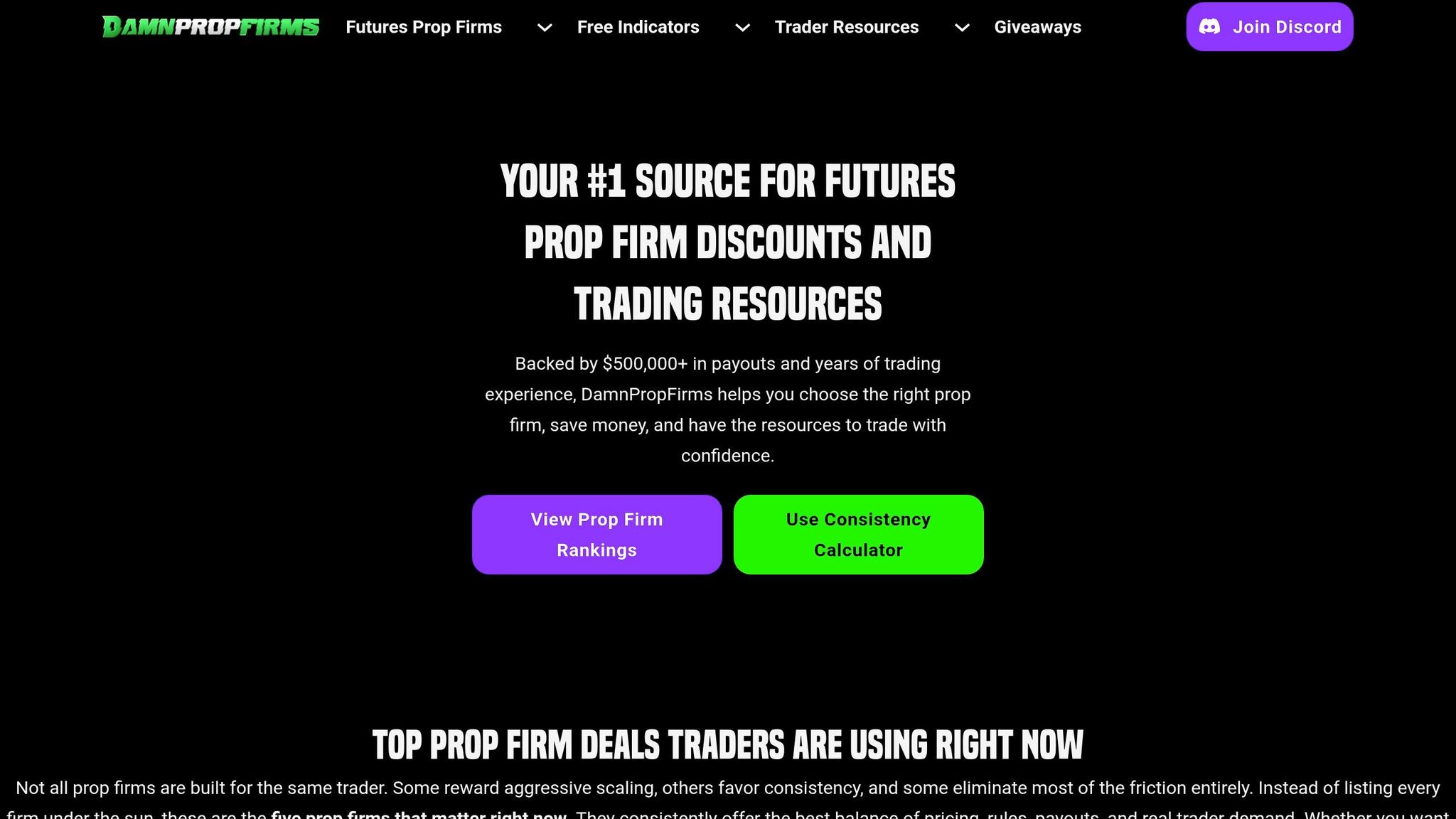
DamnPropFirms is packed with verified reviews, trading tools, and access to the Damn Good Traders Discord, a thriving community of over 3,000 active futures traders. This platform simplifies your search for top-rated prop firms by highlighting those with structured programs and trader communities where you can connect with seasoned professionals.
One standout feature is the Consistency Rule Calculator, a free tool that helps traders meet specific firm requirements, like the 50% consistency rule at Apex Trader Funding or the 40% rule at FundedNext. Additionally, the site offers TradingView indicators and guides on topics like Volume Profile and drawdown rules. Monthly rankings, based on factors like evaluation fairness, payout speed, and community feedback, ensure you’re getting insights rooted in data – not just marketing claims.
Find Mentorship Opportunities Through Top Prop Firms
Many futures prop firms provide more than just trading platforms – they also serve as learning hubs where you can connect with experienced traders. For example, Apex Trader Funding allows traders to scale up to 20 accounts and withdraw up to $100,000 every five days, offering an environment rich in mentorship opportunities. Details about their latest account types and rule updates (effective since March 1st) are available on their review page.
Other firms worth exploring include:
- Take Profit Trader: Offers daily withdrawals and copy trading for up to five live accounts. Review page.
- Lucid Trading: Features instant funding and a "LucidFlex" account with no consistency rules during the funded stage. Review page.
- FundedNext: Provides payouts within three days through its "Rapid" plan. Review page.
- Topstep and Tradeify: Both offer structured evaluation programs and access to active trader communities. Topstep review page, Tradeify review page.
Each firm’s review page includes essential details like payout speed, risk evaluations, and rule breakdowns, helping you decide if their support systems align with your goals. Plus, you can use the exclusive discount code "DGT" to save between 10% and 90% on evaluation fees, making these mentorship-focused platforms more accessible.
Conclusion
Summary of Steps to Find a Mentor
To find the right mentor for futures trading, focus on their proven success and specialized expertise in the field. Check their track record to ensure they have a history of successful futures trading and look for industry-recognized certifications like the Chartered Financial Analyst (CFA) or Financial Risk Manager (FRM). These credentials demonstrate a solid understanding of financial markets.
Equally important is their ability to communicate effectively. A good mentor should simplify complex trading concepts, tailoring their teaching to suit your learning style. As Charles Seymour puts it:
"A mentor who is able to break down these concepts and ideas in a way that is easy to understand can be a valuable asset."
Make sure they specialize in futures trading, can explain technical concepts clearly, and provide consistent support through various channels – whether that’s email, phone, or video calls. Verified testimonials with detailed feedback on their teaching approach and responsiveness are also critical. Avoid relying on vague, generic endorsements.
By focusing on these factors, you’ll be well-equipped to start your mentorship journey.
Start Your Mentorship Journey
Futures trading is a tough industry – statistics show that only about 5% to 10% of traders successfully pass proprietary firm evaluations. A skilled mentor can be the key to turning setbacks into steady progress.
Choose a mentor who understands the finer details of trading, such as the distinction between End-of-Day and intraday trailing drawdowns – nuances that can directly affect your results. Review their trading history thoroughly and ask specific questions about their strategies during your consultations. Taking the time to find the right mentor can significantly impact your success as you navigate the complexities of the futures market.
FAQs
How can I verify a futures mentor’s real track record?
To evaluate a futures mentor’s credibility, start by examining their documented trading performance. Look for verified results or evidence of steady profitability. Transparency is key, so request access to performance statements or trading account records. It’s also worth assessing their experience and standing within the trading community – this can provide additional insight into their reliability. Be cautious of mentors who fail to offer verifiable proof or rely heavily on flashy marketing instead of substance. Focus on ensuring their results are both current and consistently reliable.
Which credentials matter most for a futures trading mentor?
The most crucial qualities to look for in a futures trading mentor are expertise, real-world experience, and a proven history of success. Seek out mentors who have demonstrated consistent performance and possess a thorough understanding of trading strategies. While certifications or formal qualifications can be helpful, they aren’t as important as the mentor’s ability to offer actionable advice and guide you in building your trading skills effectively.
What’s the best way to spot a “signals” guru vs. a real mentor?
To tell the difference between a “signals” guru and a genuine mentor, focus on their expertise, track record, and teaching style. A true mentor doesn’t just hand you shortcuts – they provide tailored guidance, teach you trading strategies, and help you build your skills over time. On the other hand, a signals guru often just supplies alerts without offering meaningful insights or proof of success. Prioritize transparency and personalized communication to ensure your mentor fits your learning goals.